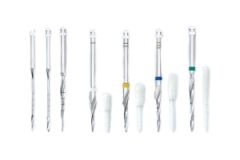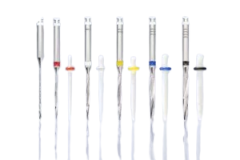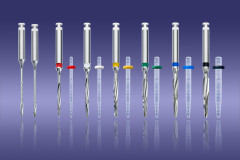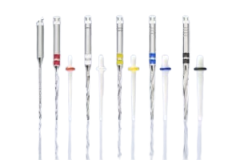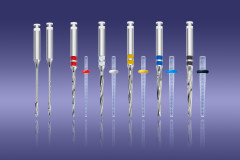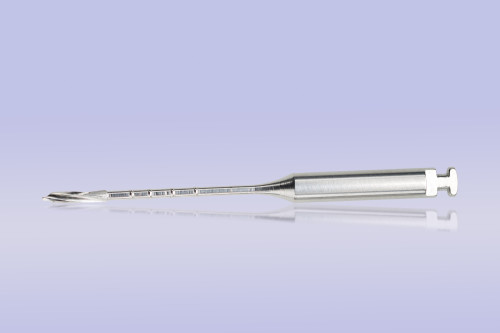
Scientifically tested and proven in practice since 2001. For further information please see our brochure »Exatec+Cytec+Contec«
HT-Glasfiber, translucent: 1.430 MPa (nach EN ISO 178)
HT-Glasfiber, opaque: 1.400 MPa (nach EN ISO 178)
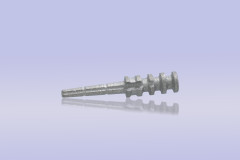
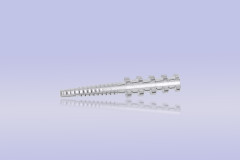
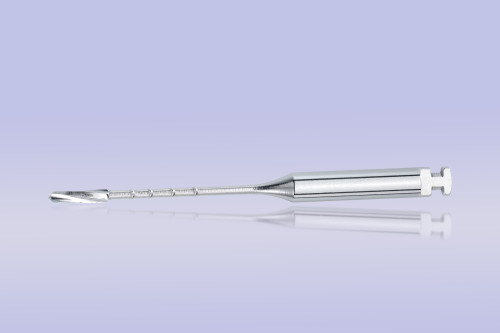
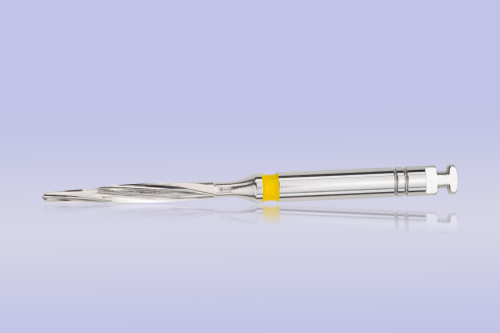
With CYTEC eco, the particularly careful application of the adhesive system is essential, as CYTEC eco does not have the mesh-like retentions.
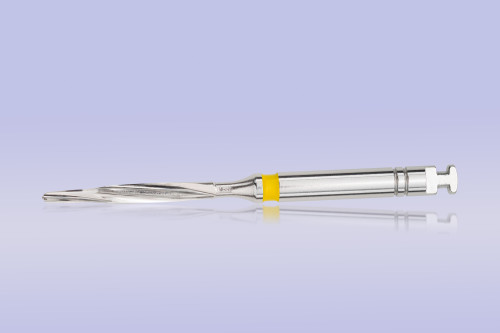
Today, there is no doubt that glass fiber root posts offer major advantages for achieving long-term stable root restorations, such as a dentin-like modulus of elasticity to reduce the risk of root fractures. Additionally, root canal retreatment—if needed—remains easier compared to titanium posts.
However, in 1995, when E. HAHNENKRATT GmbH became the first company in Germany to set the trend by offering root posts made from carbon fiber, all established manufacturers continued to use titanium root posts. Universities showed great interest after the introduction of the Composipost in 1995, but for many it took decades to revise deeply rooted conventional views. In 1998, a dissertation at the Charité Medical Faculty of Humboldt University in Berlin concluded that using a fiber-reinforced composite post in combination with dual-curing composites was much more complex than inserting a titanium post with zinc phosphate cement.*) Today, the use of composites and glass fiber root posts is the standard.
*) The references can be requested from E. HAHNENKRATT GmbH.