About us

90 years dental excellence – made in germany

Contact persons

Your contact for questions, solutions, and advice

Social commitment

Social commitment that makes a difference — locally and worldwide, for children, families, and people in need.

Career

Welcome to the HAHNENKRATT team.

Job Storys

Insights into the daily work and innovative strength of the HAHNENKRATT team.

Filter
Reset filter

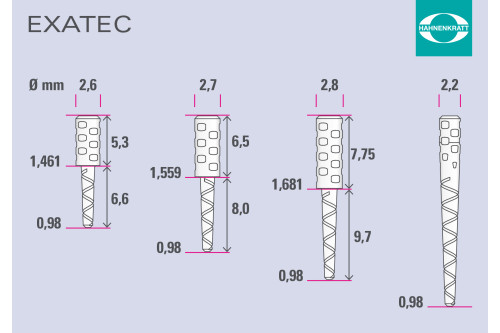
Exatec 1 (Ø 1,46 mm) Exatec 2 (Ø 2,7 mm) Exatec 3 (Ø 2,8 mm) Exatec 5 (Ø 2,2 mm) Exatec 4 (Ø 3,0 mm)

Stainless steel
Apply filter

EXATEC

... suitable for teeth that are severely damaged coronally.

More about Exatec

Filter
Reset filter

Exatec 1 (Ø 1,46 mm) Exatec 2 (Ø 2,7 mm) Exatec 3 (Ø 2,8 mm) Exatec 5 (Ø 2,2 mm) Exatec 4 (Ø 3,0 mm)

Stainless steel
Apply filter
Filter
Sort by:
Root Post Systems
REF 42010
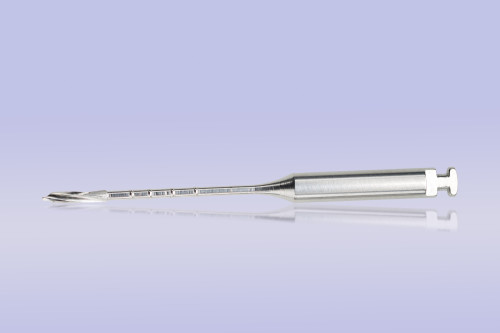
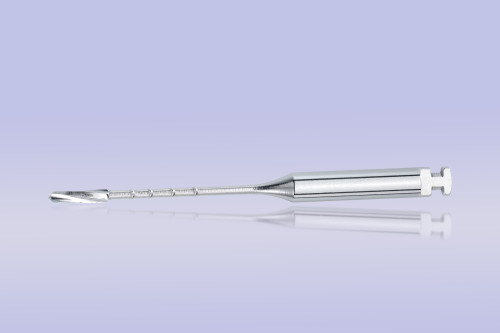
Pilot drill (with guiding tip) 5,74 € excl. VAT Product contains 1 Pieces per PU
Root Post Systems
REF 43000
Pilot drills (cutting tip) 5,74 € excl. VAT Product contains 1 Pieces per PU
Root Post Systems
REF 42100
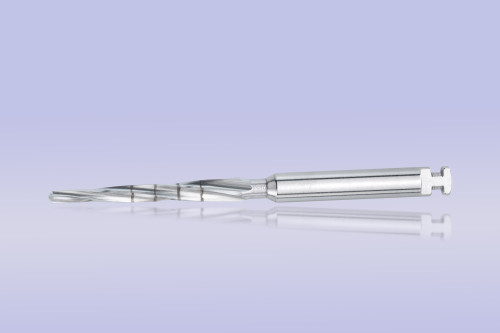
EXATEC pilot drill (universal) 5,74 € excl. VAT Product contains 1 Pieces per PU
Root Post Systems
REF 4200X
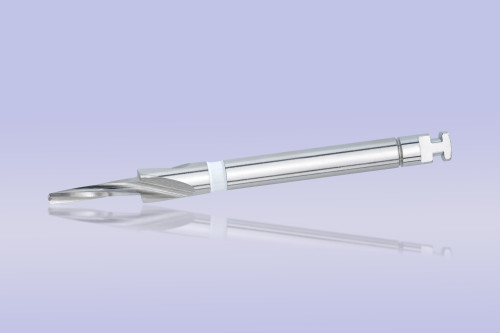
Calibration drill EXATEC from 5,74 € excl. VAT Product contains 1 Pieces per PU
Root Post Systems
REF 42600
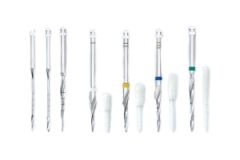
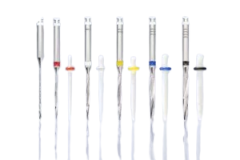
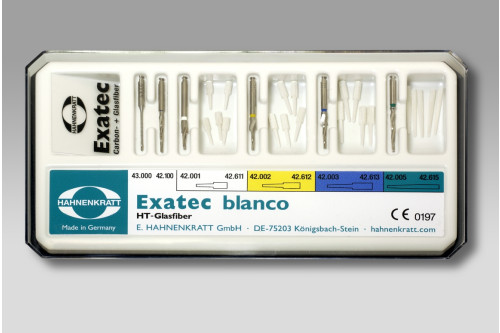
EXATEC Standard Set 182,66 € excl. VAT Product contains 1 Pieces per PU
Root Post Systems
REF 42610
EXATEC Test Set (size 2) 24,20 € excl. VAT Product contains 1 Pieces per PU
Root Post Systems
REF EXATEC BLANC-C5
EXATEC posts (refill) from 41,22 € excl. VAT Product contains 5 Pieces per PU
Root Post Systems
REF 4261X
EXATEC posts (refill) from 80,83 € excl. VAT Product contains 10 Pieces per PU
Root Post Systems
REF 10100
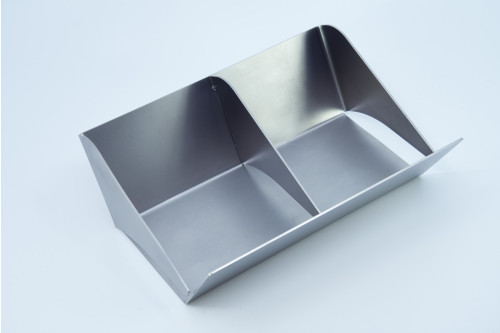
Organizer 17,46 € excl. VAT Product contains 1 Pieces per PU
Root Post Systems
REF 10003
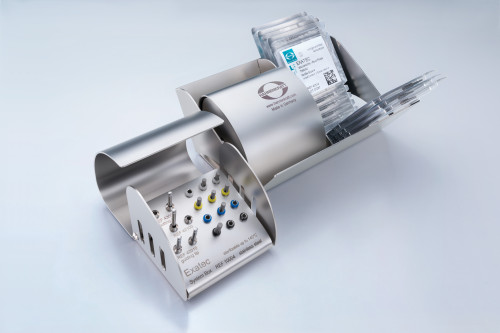
System Box for EXATEC (empty) 66,84 € excl. VAT Product contains 1 Pieces per PU

More about EXATEC

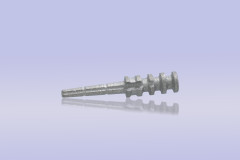
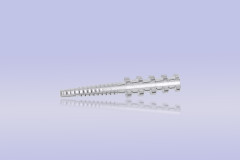
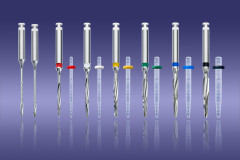
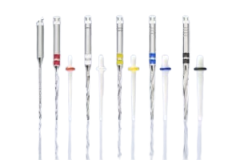
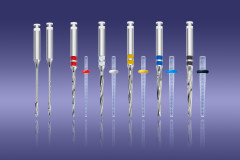
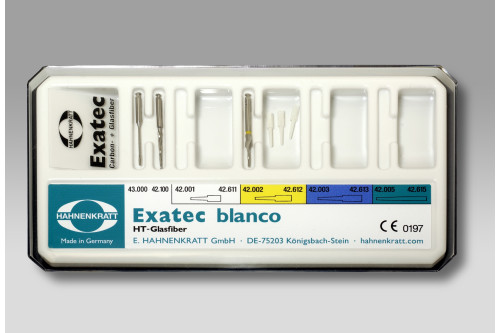
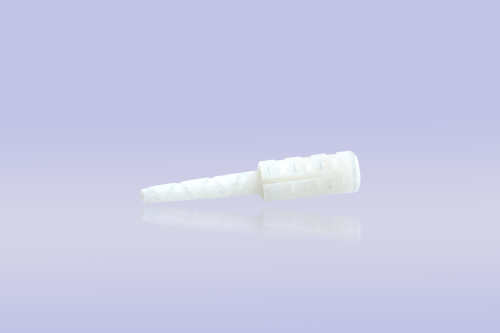
EXATEC is suitable for teeth that are severely damaged coronally. In the apical area, spiral-shaped retention lines optimize bonding (adhesion) with the composite and provide protection against twisting. For EXATEC posts with a post head, the two longitudinal extraction grooves serve for decompression and allow excess composite to flow out.

The advantages are:

  • High flexural strength & high fatigue and fracture resistance

    HT glass fiber, opaque: 1,400 MPa (according to EN ISO 178)

  • Homogeneous core build-up
    Thanks to the dentin-like elastic modulus of 36.4 GPa (according to EN ISO 178), the transmission of masticatory forces to the dentin—and thus the risk of root fracture—is minimized.

  • Optimized adhesion due to a microporous and retentive surface
    The fiber-structured, retentive surface eliminates the need for silanization, as demonstrated by comparative pull-out studies conducted at German universities.

Scientifically tested and proven in practice since 1995

HAHNENKRATT was the pioneering company in Germany in 1995 to manufacture root posts from fiber-reinforced composite materials.

Scientific studies and over 25 years of practical long-term experience—for example, at the ZZMK Carolinum in Frankfurt—demonstrate the superior advantages of our post systems, such as the micro-retentive surface of the post.

Studies at three different German universities confirmed that the unique surface structure results in optimized bonding between the post and the adhesive cement—without the use of silane or primer.

Root build-up systems through the ages

Today, it is undisputed that glass fiber root posts offer advantages for long-lasting, stable root build-up, such as a dentin-like modulus of elasticity to minimize the risk of root fractures. In addition, if necessary, a root canal revision is easier to perform compared to titanium posts.

However, back in 1995, when E. HAHNENKRATT GmbH became the first company in Germany to offer carbon fiber root posts and set the trend, all established manufacturers continued to rely on titanium root posts. After the introduction of Composipost in 1995, universities showed great interest, but it took decades for many to re-evaluate their established conventional views. In 1998, a dissertation at the Medical Faculty of Charité at Humboldt University of Berlin concluded that the use of a fiber-reinforced composite post combined with dual-cure composites was much more labor-intensive than inserting a titanium post using zinc phosphate cement.*) Today, the use of composites and glass fiber root posts is standard practice.

*) The references can be requested from E. HAHNENKRATT GmbH.