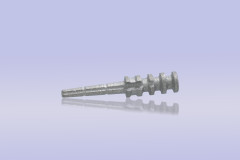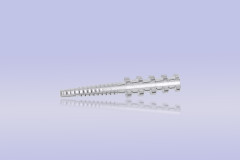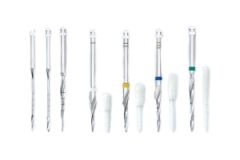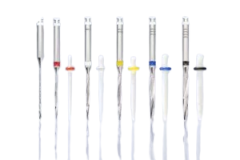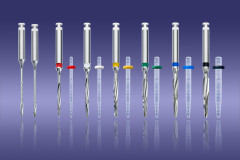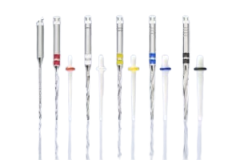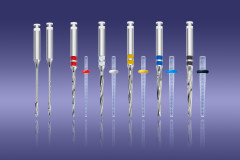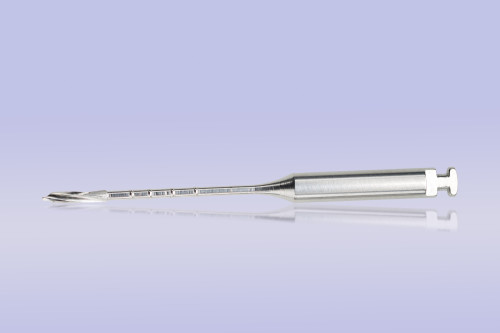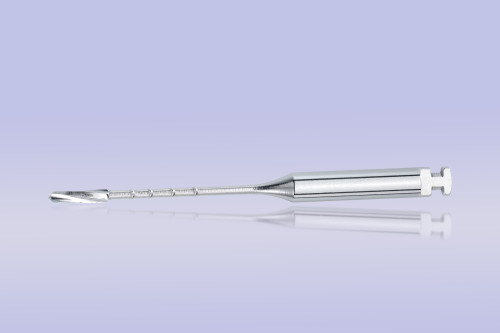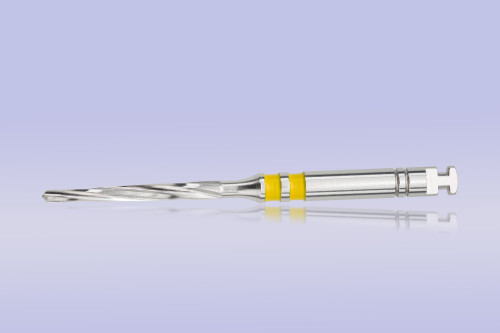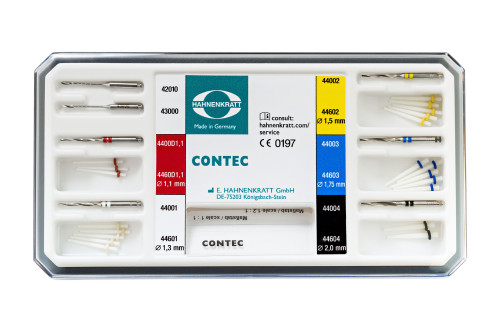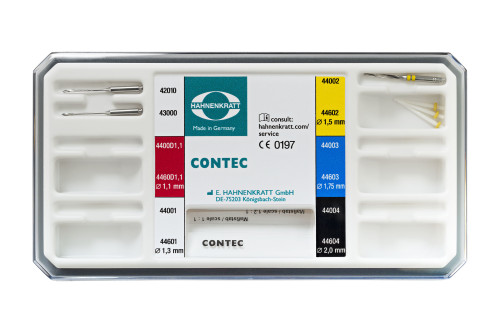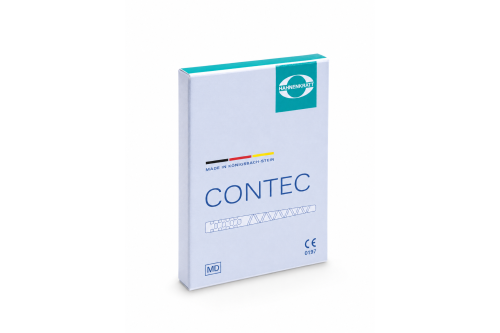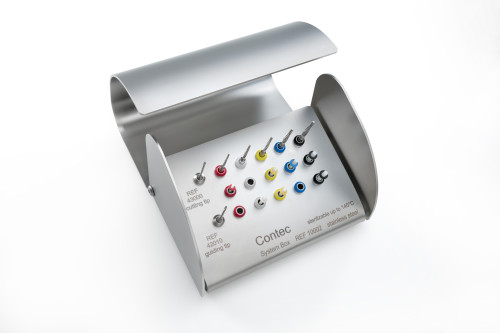
The double taper closely matches the natural shape of the root canal. Scientifically tested and proven in practice since 2001. For further information please see our brochure »Exatec+Cytec+Contec«
Optimized Flexural Strength
HT-Glasfiber, translucent: 1.430 MPa (nach EN ISO 178)
HT-Glasfiber, opaque: 1.400 MPa (nach EN ISO 178)
Optimized Fatigue and Fracture Resistance
Homogeneity through Dentin-like Modulus of Elasticity
Optimized, strong bond to composite
With CONTECeco, the particularly careful application of the adhesive system is essential, as CYTEC eco does not have the mesh-like retentions.
Today, it is undisputed that glass fiber root posts offer advantages for achieving long-lasting, stable root build-ups, such as a dentin-like modulus of elasticity that minimizes the risk of root fractures. In addition, in case revision of the root canal is necessary, it is much easier to perform when compared to titanium posts.
However, back in 1995, when the company E. HAHNENKRATT GmbH became the first in Germany to offer carbon fiber root posts, all established manufacturers were still focusing on titanium posts. After the introduction of Composipost in 1995, universities showed great interest, but it took many decades for conventional beliefs to change. In 1998, during the preparation of a dissertation at the Charité Medical Faculty of Humboldt University in Berlin, it was concluded that using a fiber-reinforced post in combination with dual-curing composites was considered much more complex than inserting a titanium post with zinc phosphate cement.*) Today, using composites and glass fiber root posts has become standard practice.
*) Literature can be requested from E. HAHNENKRATT GmbH.